A Body Corporate’s Guide to Selecting a Project Manager

Managing a Body Corporate project, whether it’s remediation, a capital upgrade, or long-term maintenance, is a complex undertaking. These projects are governed by legislation, involve multiple stakeholders, and carry financial and reputational risks. A skilled, independent Project Manager (PM) can be the difference between a smooth process and a costly misstep.
But with the title “Project Manager” being unregulated in New Zealand, how do you know who to trust? This guide helps Body Corporate committees make informed decisions by outlining what to look for in a PM, what questions to ask, and how to ensure the right fit for your building and owners.
What Makes a Good Project Manager for Body Corporate Work?
- Understand the Unit Titles Amendment Act 2022, any regulations referred to therein, and the governance obligations of committees.
- Understand the Building Act, Construction Contracts Act, and any regulations referred to therein.
- Be independent, not tied to suppliers, owners, or committee members.
- Have experience with multi-unit residential buildings and Body Corporate processes.
- Be transparent, communicative, and collaborative.
- Know how to manage scope, budget, risk, and contingency within a governance framework.
Key Qualities and Capabilities to Look For:
Governance Awareness and Role Clarity - A PM must understand the distinct roles of the Body Corporate Chair, Committee, and Owners. They should work within these structures, not override them. Their job is to guide, not dictate.
Proven Experience with Body Corporates - Look for a PM who has delivered similar projects in New Zealand, worked with committees and owners through remediation or upgrades, and provided references from other Body Corporates.
Clear Scope Definition - Before work begins, the PM should help define the Scope of Work and Scope of Services to ensure accountability.
Construction and Legal Knowledge - A PM should understand design, consenting, and construction processes and relevant legislation, including the Construction Contracts Act.
Decision-Making Boundaries - When the time comes to appoint a building contractor, it may be necessary to appoint an engineer to the Contract, depending on the type of contract used. If the PM is appointed Engineer to the Contract (ETC), they must act impartially. Committees should consider whether combining the PM and ETC roles suits their governance needs.
Financial Guidance and Funding Support - PMs should help committees model cashflows, understand funding options, and communicate financial implications to owners. Some of this work may be carried out through third parties, requiring the PM to align all parties and make decisions.
Independence and Ethics - A PM should be product-neutral, avoid exclusive relationships with suppliers, and recommend legal advice at key decision points.
Contractual Clarity - A written contract should define scope of services, reporting lines, fee structure, and dispute resolution mechanisms.
Time Management - Delays cost money. A good PM actively manages timelines, tracks progress, and makes timely decisions.
Procurement Strategy - PMs should tailor procurement to the project’s complexity and demonstrate experience in both competitive tendering and early contractor involvement.
Team Coordination - A PM coordinates specialists, such as engineers, surveyors, contractors, and legal advisors, so that each contributes effectively.
Industry Recognition - Membership in professional bodies like BCCG and SCA NZ shows commitment to best practice and ethical standards.
Communication and Integrity - A strong PM gives honest, evidence-based advice, supports committees through difficult decisions, and communicates clearly with all stakeholders.
Questions to Ask When Recruiting a PM
- Can you provide references from other Body Corporates?
- Please describe the projects you have previously worked on that are similar to ours.
- Have you worked on projects similar to ours?
- Are you independent of suppliers and owners?
- How do you manage scope, budget, and risk?
- What procurement strategies do you recommend?
- Are you familiar with the Unit Titles Amendment Act 2022?
- Are you a member of BCCG or SCA NZ?
- How do you coordinate across specialists?
- What level of decision-making do you expect to hold?
The Role of Technology and AI
While AI tools may assist with cost modelling, reporting, and risk analysis, they are no substitute for human judgment. Trust, independence, and communication remain central to successful project management.
Resources:
15 Questions for Appointing a Project Manager (PDF)
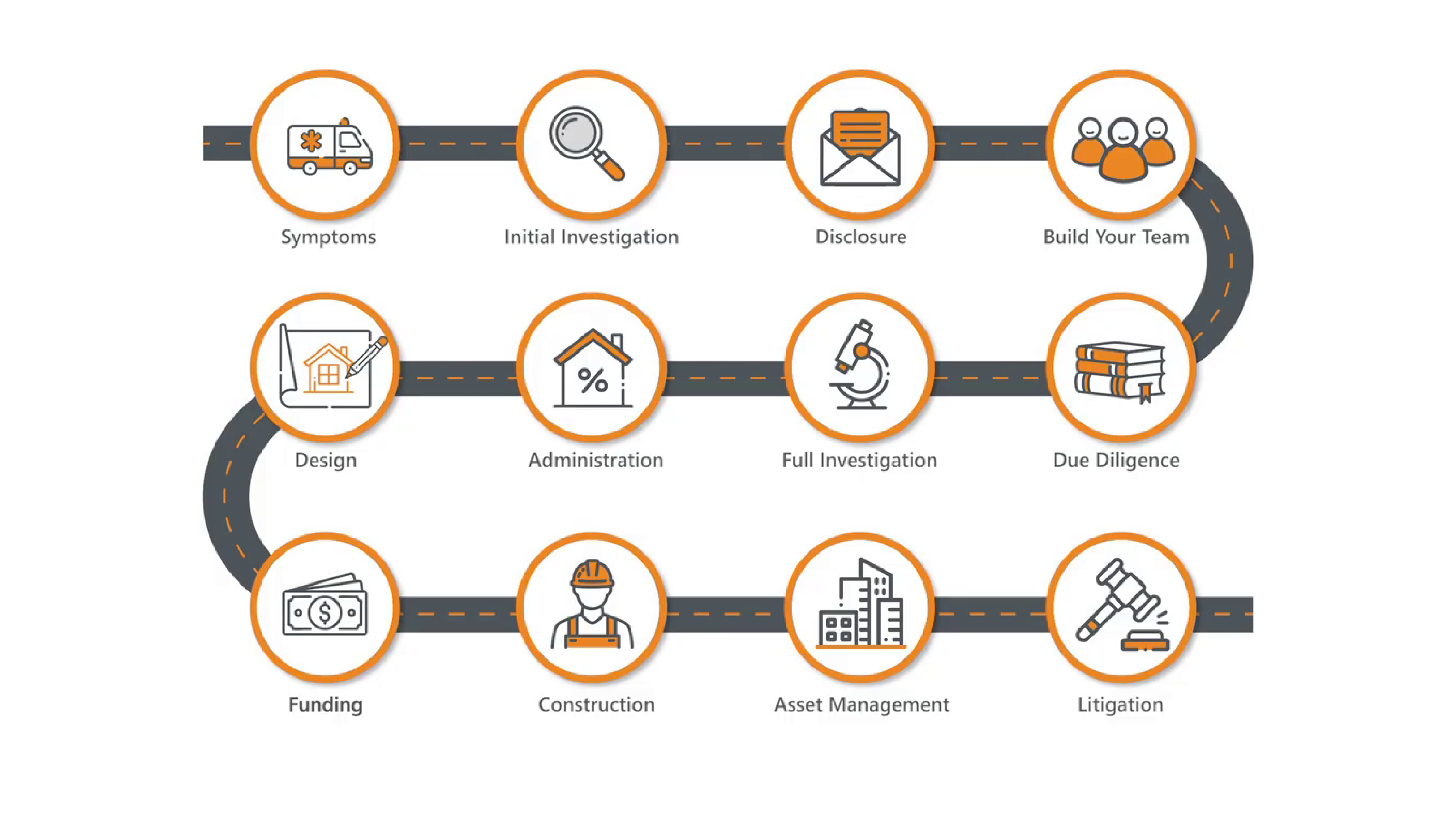
Route Through Remediation (Youtube Video)